
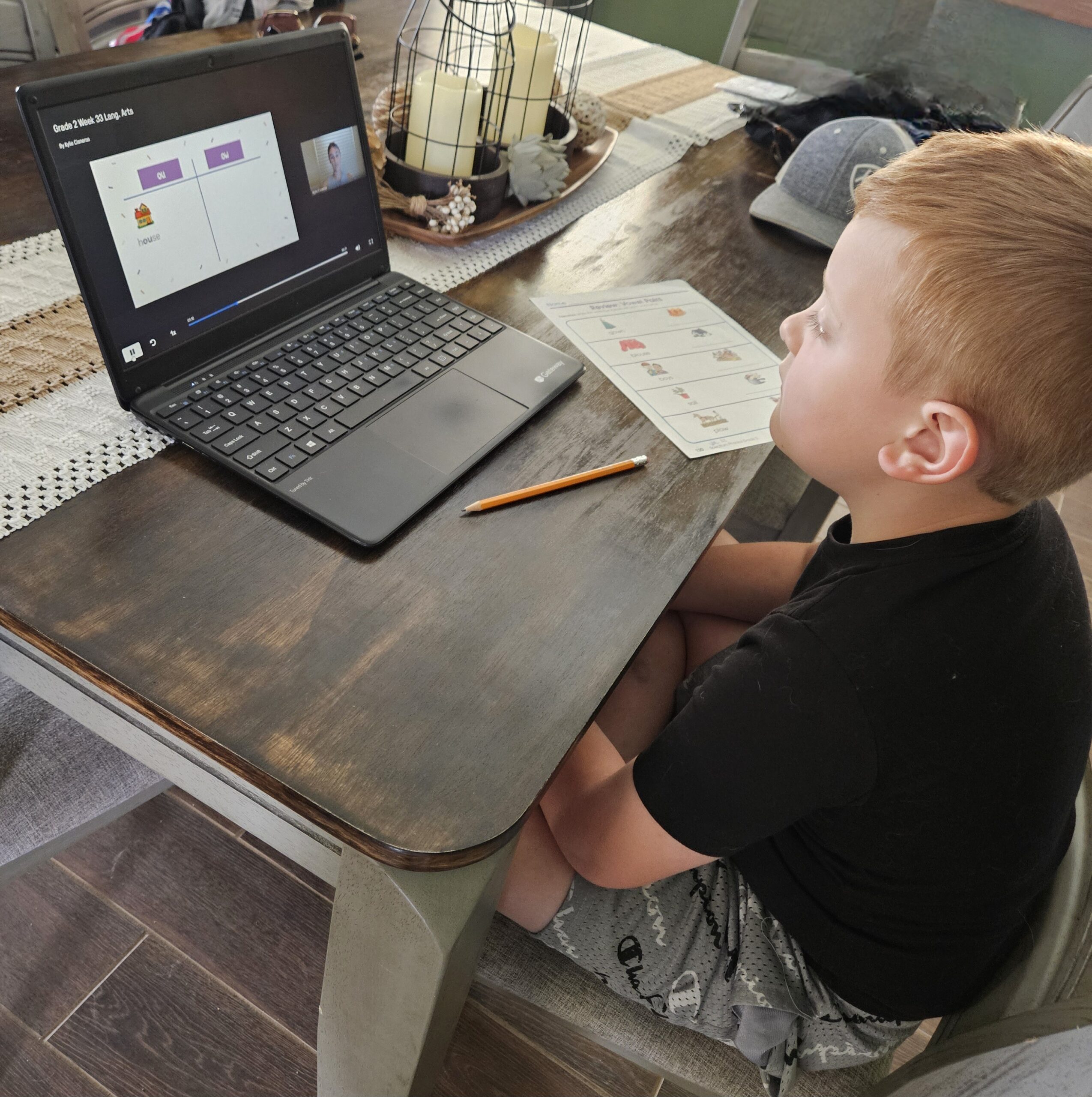

If you’re searching for how to start doing online school, chances are you’re standing at a crossroads. Maybe your child is feeling overwhelmed in a traditional classroom. Maybe they’re bored, falling behind, or just not being supported in the way they need. Or maybe your family’s schedule, travel, or lifestyle simply doesn’t fit neatly into a standard school day.
Whatever brought you here, know this first: you’re not alone—and there are more options than ever before. Online school has grown rapidly over the past several years, and today it offers families flexibility, structure, and community without sacrificing academic support or meaningful teacher relationships.
This guide will walk you through what online school really looks like, how to get started, and how to know if it’s the right fit for you and your family.
What Does “Online School” Actually Mean?
Online school isn’t one single model. For some families, it means fully self-paced learning at home. For others, it looks more like a structured school day, just without the physical campus.
In most accredited online schools, including On Track School, students:
- Follow a structured academic program aligned with grade-level standards.
- Work with certified teachers who provide instruction, feedback, and support.
- Learn at a pace and schedule that fits their individual needs.
- Remain part of a school community, not isolated learners.
For many students who struggle in traditional environments, online school offers something powerful: the ability to learn in a way that finally makes sense to them.
Step 1: Identify Why You’re Making the Change
Before enrolling, it helps to reflect on why you’re exploring online school in the first place. Families often come to online learning because:
- Their family values and priorities differ from what public schools offer.
- Athletics, travel, or creative pursuits require a more flexible schedule.
- Their child feels anxious or overwhelmed at school.
- Learning differences aren’t being adequately supported.
- Bullying or social stress has affected academic confidence.
- The pace of a traditional classroom doesn’t match their child’s needs.
There’s no “wrong” reason to consider online school. Understanding your motivation will help you choose a program that truly supports your child, not just academically, but emotionally as well.
Step 2: Research Accredited Online Schools
One of the most important steps in learning how to start doing online school is choosing the right program.
Look for an online school that offers:
- Accreditation (so credits and diplomas are recognized)
- Certified teachers, not just pre-recorded lessons
- Flexible scheduling, especially if your child needs time to catch up or move ahead
- Personalized support, not a one-size-fits-all approach
On Track School, for example, is based in Florida but serves students from across the country through a predominantly online model. It also holds accreditation from Cognia, the largest community of education professionals worldwide. On Track students receive individualized instruction and teacher support while remaining connected to a larger learning community.
Step 3: Understand Enrollment Requirements
Every online school has its own enrollment process, but most will ask for:
- Proof of previous enrollment or transcripts
- Basic student and family information
- Placement or assessment information (in some cases)
If you’re transferring mid-year, don’t worry—many online schools are designed to help students transition smoothly at any point in the academic calendar.
A strong admissions team will guide you through each step and answer questions along the way. If you ever feel rushed or confused, that’s a sign to pause and ask for clarity.
If you’re ready right away, remember that On Track School has an early bird enrollment special ($100 off for new families and 50% off for existing families).
Step 4: Plan for Your Child’s Learning Environment at Home
One of the most common concerns parents have when learning how to start doing online school is: “Do I need to become the teacher?”
The answer, in most cases, is no.
In structured online schools, teachers handle instruction, grading, and academic planning. Parents often act as learning coaches—providing encouragement, helping with time management, and creating a supportive routine. At On Track School, students can take advantage of our success coaching to ensure they’re able to find success academically and beyond.
Helpful tips include:
- Designating a quiet, comfortable workspace
- Establishing a daily rhythm (even if it’s flexible)
- Checking in regularly without hovering
- Celebrating progress, not just grades
Online school works best when learning feels supported, not pressured.
Step 5: Ask About Community & Support
One misconception about online school is that students are on their own. In reality, strong programs intentionally build connections, not just with the teachers but with other students as well. An online format doesn’t mean your child has to sacrifice building friendships with fellow students.
When evaluating an online school, ask:
- How do students interact with teachers?
- Are there live classes, check-ins, or mentoring opportunities?
- What support exists if a student starts to struggle?
- How does the school foster community among the students?
At On Track School, community is a core part of the experience. Students aren’t just completing assignments; they’re building relationships, receiving individualized guidance, and learning in ways that honor how they learn best.
Step 6: Review Cost & Financial Support Options
Cost is often a big part of deciding how to start doing online school. Tuition and fees vary widely depending on the program, but many families are surprised to learn there may be financial support available.
Some online schools offer:
- Scholarships
- Flexible payment plans
- Partnerships with organizations or sponsors
- School Choice funding
- Outside scholarship opportunities
On Track School offers multiple scholarship opportunities designed to make education more accessible for families, including merit-based, community-focused, and interest-based scholarships. These options can significantly reduce the cost of enrollment and help families feel confident moving forward.
Step 7: Give Your Family Time to Adjust
Transitioning to online school is a change for students and their families. It’s normal for the first few weeks to feel different as everyone settles into a new rhythm.
Be patient. Stay curious. And remember that growth often happens quietly before it shows up in grades, test scores, or at-home behavior.
Many families find that once the pressure of a traditional classroom is removed, students begin to:
- Rebuild confidence.
- Engage more deeply with learning.
- Feel seen and supported again.
Is Online School the Right Fit for Your Child?
Online school is all about choosing a path that works.
If your child needs flexibility, individualized support, and a learning environment that adapts to them, online school may be the fresh start your family has been looking for.
At On Track School, students are never just a number. They’re part of a community that values curiosity, growth, and learning in all its forms.
If you’re still wondering how to start doing online school, the best next step is a conversation. Ask questions. Explore your options. And trust that choosing a learning environment that truly supports your child is always a step in the right direction.

